The first "Red Hawk" advanced trainer aircraft enters service, set to profoundly transform the U.S. Air Force training system.
11/01/2026
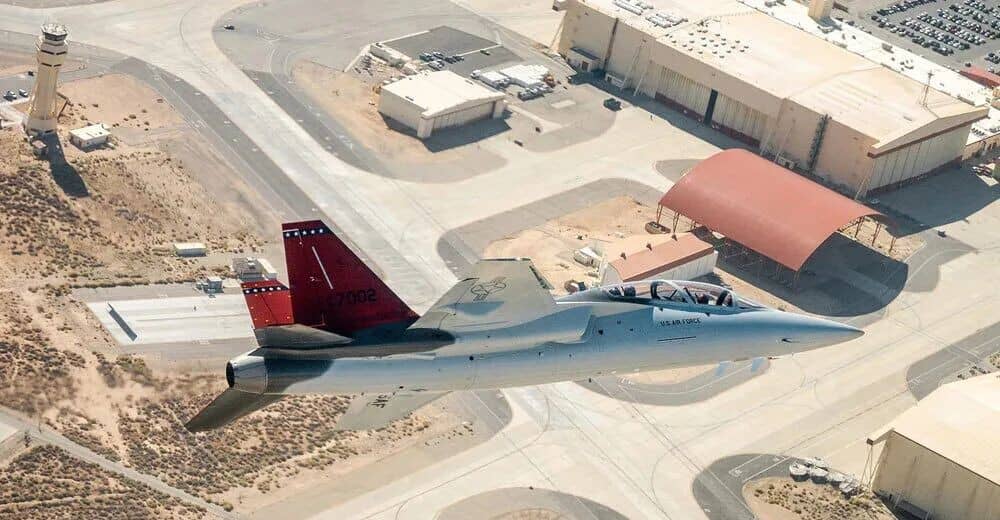
On January 9, 2026, the first T-7A Red Hawk advanced trainer aircraft held its induction ceremony at Joint Base San Antonio-Randolph in Texas, marking a new era in U.S. Air Force pilot training.
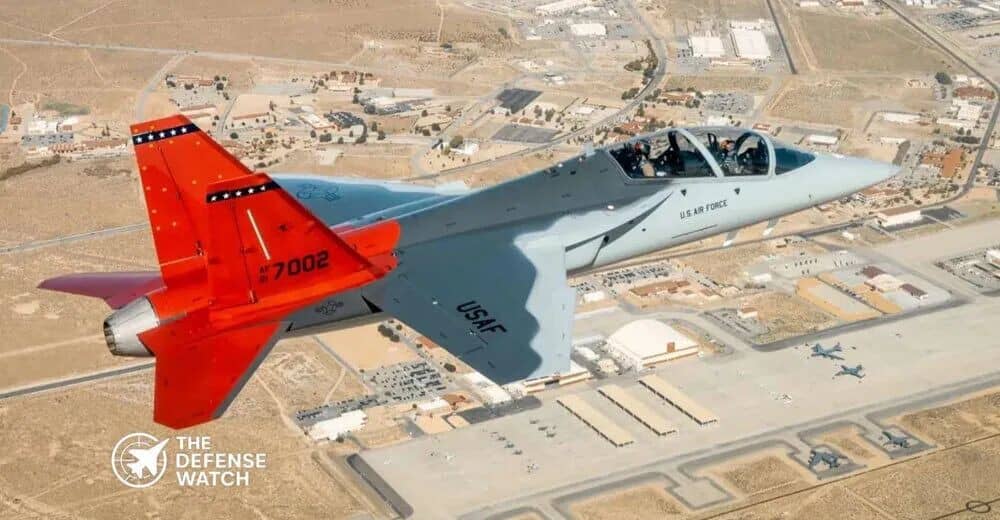
The United States Air Force Education and Training Command (AETC) has confirmed the news. Boeing announced the entry into service of the first operational Red Eagle through its official account. This commissioning marks the transition of the U.S. Air Force's training system from traditional trainers used since the Cold War era to advanced trainers with digital fly-by-wire systems. The aim is to prepare pilots for fighters, bombers, and future sixth-generation fighters in data-intensive air combat environments.
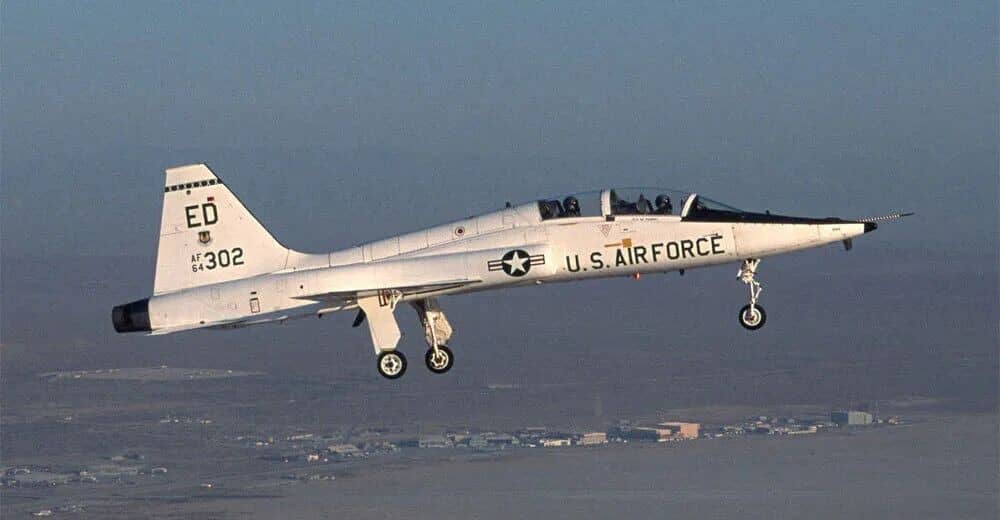
For over six decades, the advanced training of U.S. Air Force pilots has centered around the T-38 Talon trainer. Entering service in the early 1960s, it was originally designed to teach basic jet aircraft handling skills in an analog cockpit environment. Although the T-38 has undergone multiple service life extensions and incremental avionics upgrades, its design was never intended to simulate the sensor fusion, mission systems management, and networked decision-making required for modern aerial combat. As frontline fighter aircraft have evolved, the training system has increasingly relied on simulators and academic instruction to bridge the widening gap between what trainees experience in the air and the challenges they will soon face in operational squadrons.
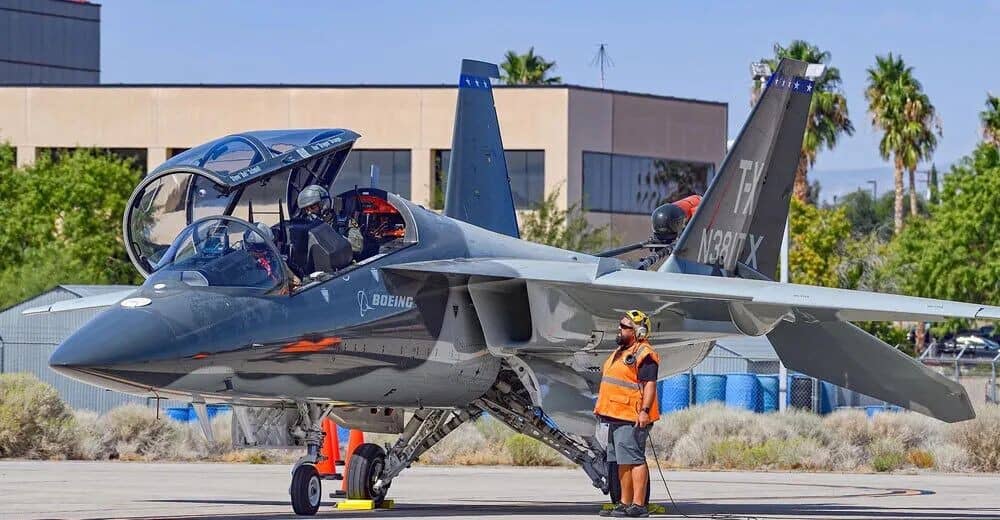
The commissioning of the T-7A Red Hawk marks the U.S. Air Force's determination to bridge this gap from the source. The aircraft will first be equipped by the 99th Flying Training Squadron under the 12th Flying Training Wing, aiming to serve as the core replacement for the T-38 in the advanced training system. As the T-7A gradually replaces the Talon trainer, it is expected that more flying training squadrons will be equipped with this type of trainer. Unlike its predecessor, the Red Hawk was designed from the outset as a digital advanced trainer, rather than modifying traditional fighter jets to meet specific needs.
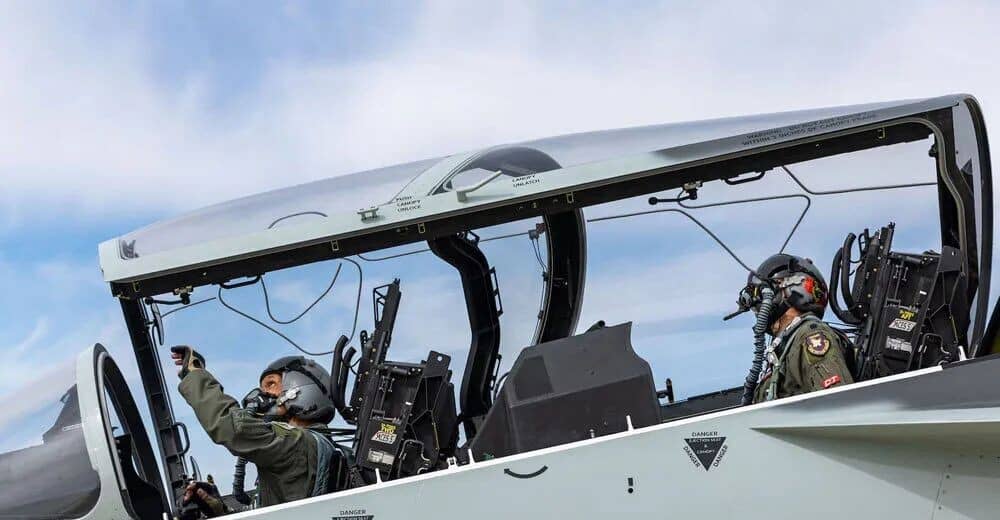
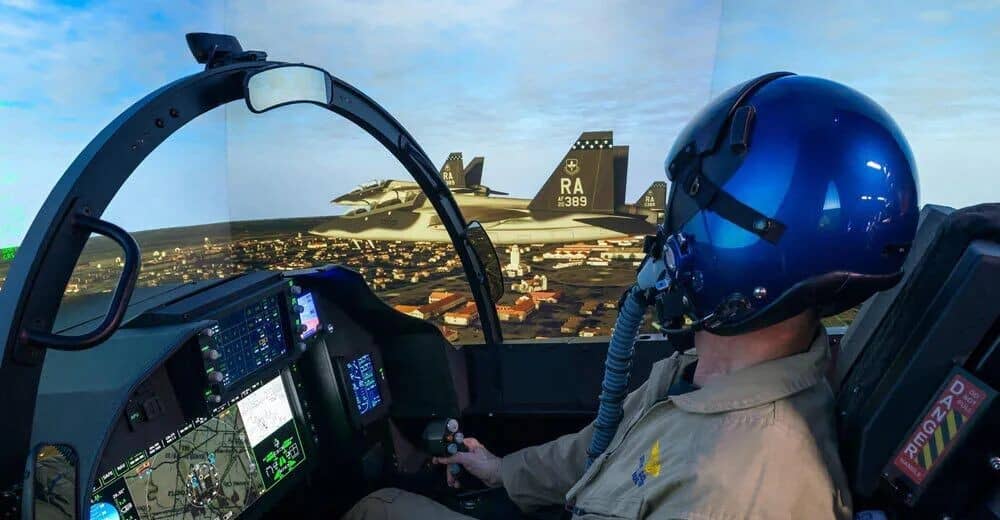
From a technical perspective, the differences between these two trainer aircraft are fundamental. The former emphasizes basic stick-and-rudder handling skills, with limited onboard systems that force instructors to simulate modern complex systems through external means, while the latter integrates such complexity directly into the flight experience. Its cockpit design centers on large-area digital displays and a modern throttle and stick control system, aiming to familiarize trainees with the information management challenges faced by fifth-generation fighters and advanced bombers. This reflects the U.S. military training institutions’ understanding of modern pilot performance—namely, that a pilot’s combat effectiveness increasingly depends on integrated cognition, prioritization, and decision-making under pressure, rather than merely the ability to control the aircraft.
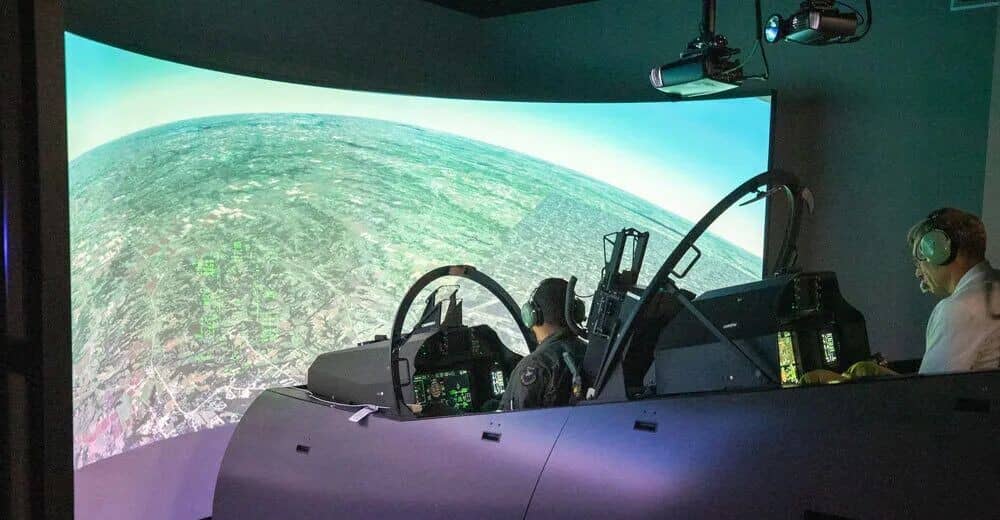
The performance characteristics of the Red Eagle trainer were fully considered for future development needs from the initial design phase. This aircraft is designed to provide high maneuverability, rapid acceleration, and precise control within a wide flight envelope, enabling instructors to teach energy management and maneuvering skills that meet the demands of modern aerial combat. Its digital flight control system can adjust handling characteristics according to different training stages, offering a level of flexibility not available in the older T-38 trainer. In practice, this allows a single trainer to support a broader range of instructional objectives without requiring manual compromises.
The practical realities of maintenance further explain why the U.S. Air Force considers this transition imperative. After decades of intensive use, the - fleet faces increasingly heavy maintenance costs, aging components, and reduced aircraft availability, all of which directly affect the pace of pilot training. The - was designed with maintainability as a core requirement, incorporating modular systems and digital diagnostic technologies aimed at reducing downtime and increasing sortie rates. For a training institution tasked with the mission of large-scale pilot development, these features translate directly into operational resilience.
In addition to replacing outdated trainer aircraft, the T-7A will also serve as the core of a broader transformation in the pilot training system. Its open-system architecture allows for upgrades to the driving software and enables the integration of new training capabilities over time, including simulated sensors, weapons, and mission systems, to meet evolving operational demands. As the U.S. Air Force looks toward future sixth-generation fighter concepts, collaborative combat aircraft, and increasingly networked aerial warfare, the Red Hawk trainer provides a training platform capable of evolving alongside these requirements, without being constrained by its original configuration.
For the United States Air Force, its impact extends far beyond the training base. The pilot training system is now better aligned with operational aircraft, which is expected to reduce the adjustment period for graduates entering combat squadrons, shorten the time required to reach combat-ready proficiency, and enhance overall force generation capacity during periods of sustained operational demand. In this sense, it not only represents the modernization of training equipment but also constitutes a structural investment in the long-term competitiveness of air power.
Therefore, the arrival of the first operational T-7A at Randolph Air Force Base holds far more than just symbolic milestone significance. It marks the official launch of a program aimed at phasing out training models originating from the 1960s and replacing them with a new model oriented toward the era of software, sensors, and information dominance. As more Red Hawk trainers are put into service and the T-38 is gradually retired, the T-7A will become the foundational training equipment for the U.S. Air Force to cultivate pilots for the new generation of fighters and bombers.