Unmanned Combat Equipment in the Russia-Ukraine Conflict: Reshaping the Form of Modern Warfare
09/01/2026
Recently, the Ukrainian National Security Service publicly announced that the Ukrainian military has for the first time used an unmanned underwater vehicle to attack a Russian Navy Kilo-class submarine, causing actual damage.
In response, the Russian Ministry of Defense issued a statement refuting the claims, stating that although the Novorossiysk naval base was attacked by Ukrainian forces, all ships, submarines, and crew members remained undamaged.
Footage of the Ukrainian attack on a Russian naval base.
Although Russia and Ukraine each have their own version of events, it is undeniable that in the nearly four-year-long Russia-Ukraine conflict, unmanned combat equipment has played an increasingly prominent role, reflecting new trends in modern warfare.
Unmanned equipment achieves full-domain coverage.
Since the outbreak of the Russia-Ukraine conflict, various unmanned combat equipment such as drones, unmanned boats, and unmanned underwater vehicles have taken the stage, repeatedly demonstrating remarkable effectiveness in key battles and special operations, showcasing a strong degree of irreplaceability.
Unmanned underwater vehicles (UUVs) are a new type of unmanned combat equipment capable of autonomously performing reconnaissance, surveillance, and attack missions underwater. With features such as high autonomy, strong concealment, and high mobility, they are regarded as a key factor in reshaping the rules of future naval warfare.
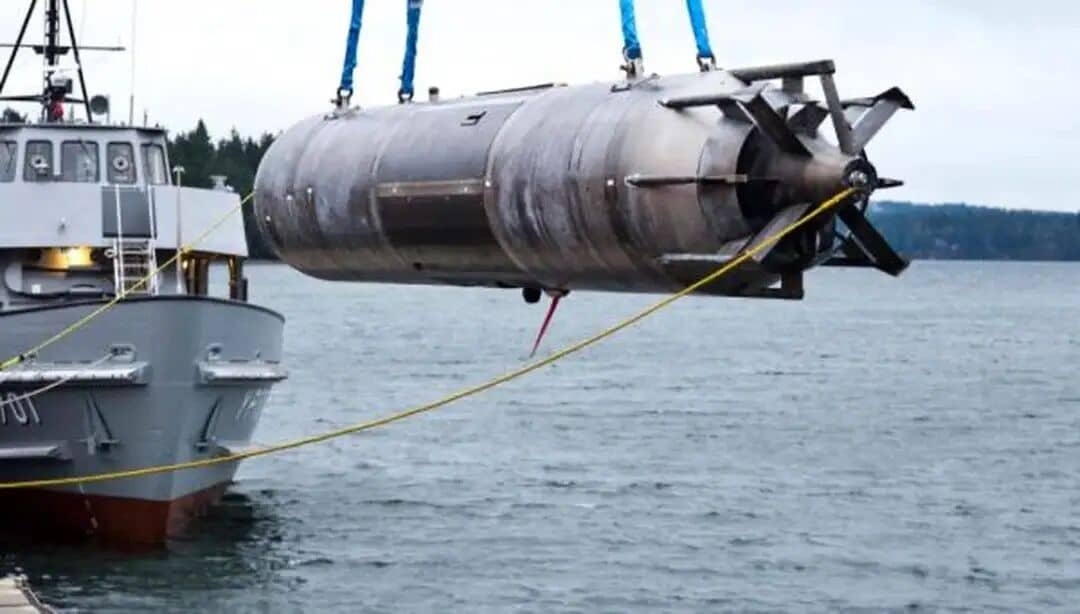 Ukraine tests an unmanned underwater vehicle named Marichka.
Compared to unmanned surface vessels, the greatest advantage of unmanned underwater vehicles lies in their ability to effectively evade conventional defense measures such as shipborne radar, while leveraging the incompressibility of water to deliver devastating strikes against targets.
Since the outbreak of the Russia-Ukraine conflict, due to frequent unmanned boat attacks by Ukrainian forces on naval bases such as Sevastopol, the Russian military has been forced to withdraw the main force of its fleet to the Novorossiysk base and deploy multiple layers of surface barrier nets in the port.
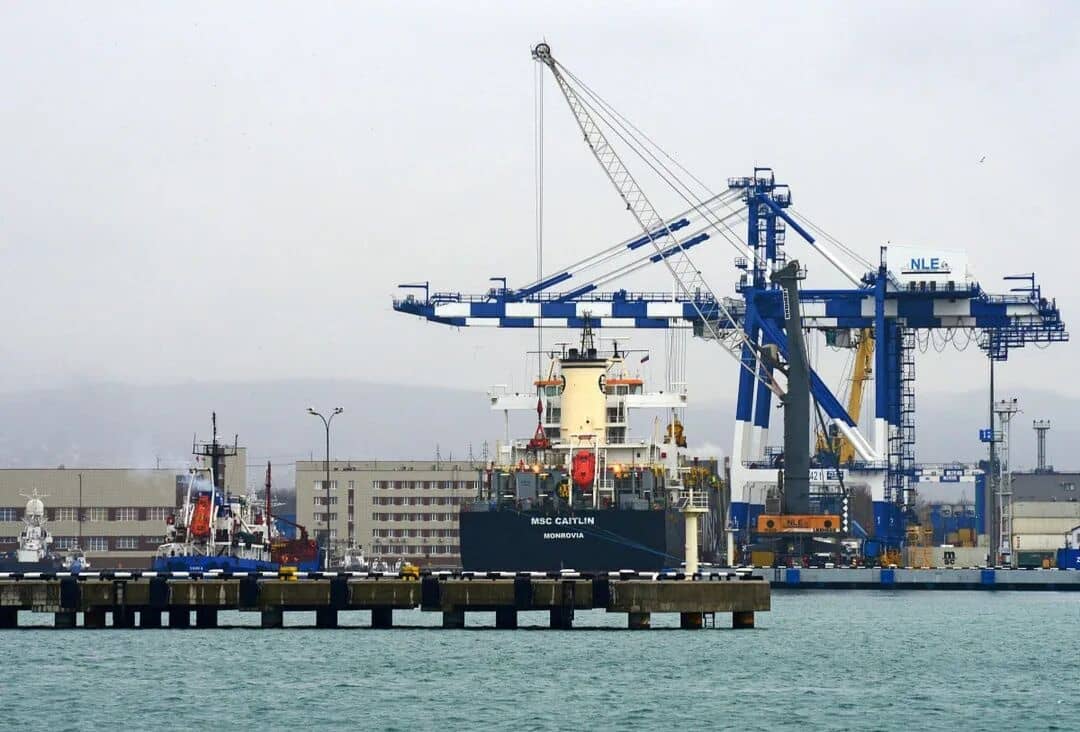 The Novorossiysk Naval Base of Russia. The Novorossiysk Naval Base of Russia.
In this operation, the Ukrainian military effectively evaded Russian detection by using the Subsea Baby unmanned underwater vehicle to infiltrate the military harbor and launch an attack, revealing that Russia still has vulnerabilities in detecting and striking underwater unmanned equipment.
The success of the assault operation signifies that the Ukrainian military is developing a coordinated combat model of surface containment and underwater surprise attacks, which will further strengthen Ukraine's resolve to launch asymmetric strikes against Russia. At the same time, to enhance response capabilities, the Russian military is also focusing on developing a defense system for maritime unmanned equipment.
Unmanned Swarms, Galloping Across the Land
On the land battlefield, unmanned equipment is also evolving into a key factor that can influence the course of the battle.
Since the beginning of this year, both Russia and Ukraine have begun deploying unmanned combat clusters on the ground battlefield, marking the first time in human warfare history that large-scale robots have participated in combat.
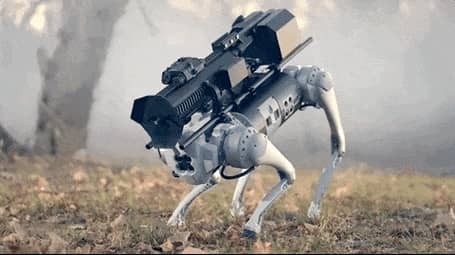
Small robotic dogs on the Russia-Ukraine battlefield.
Among them, small suicide drones can stealthily approach and destroy enemy fortifications, clearing obstacles for subsequent offensives; small unmanned combat vehicles equipped with machine guns, grenade launchers, and other gear can partially replace infantry tasks; small robotic dogs can penetrate urban street battles and high-risk minefields to perform reconnaissance, transportation, fire support, and other missions, enhancing the operational flexibility of troops in complex environments.
In the field of logistics support, unmanned transport vehicles can undertake tasks such as casualty evacuation, ammunition resupply, and material delivery, effectively addressing the challenges of traditional logistics support, including difficult forward delivery, high risks, and poor endurance.
Ground unmanned equipment, leveraging its advantages of low cost, zero casualties, and high endurance, is driving the evolution of land warfare toward integrated reconnaissance and strike, human-machine collaboration, and swarm intelligence.
Drones, renowned in aerial combat.
In modern aerial warfare, unmanned combat systems demonstrate greater survivability and cost advantages over traditional equipment in areas such as reconnaissance, strike operations, and electronic warfare, with their role becoming increasingly prominent.
On the Russia-Ukraine battlefield, drones have made a name for themselves, demonstrating advantages far surpassing traditional equipment across multiple domains. According to statistics, up to 80% of casualties on both sides are caused by unmanned aerial systems.
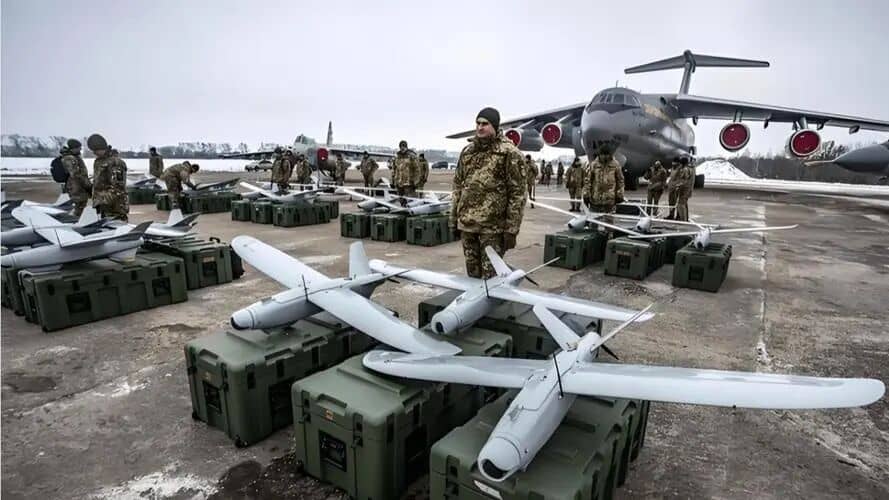 Drones on the Russia-Ukraine battlefield. Drones on the Russia-Ukraine battlefield.
During Operation Spider Web, the Ukrainian military deployed a fleet of FPV drones with a total value of less than $2 million, successfully destroying Russian strategic bombers worth up to $7 billion, severely crippling Russia's strategic nuclear strike capability.
The Russian military also extensively employs low-cost drones such as the Shahed-136 model (with a unit cost of only 20,000 USD), continuously conducting long-range harassment attacks on infrastructure in the rear areas of Ukraine, including power, energy, and transportation facilities.
This cost advantage can create an asymmetric attrition effect, using low-cost unmanned systems to continuously constrain and deplete the opponent's high-value equipment, forcing them to invest resources several times greater than one's own in defense.
Notably, the Russia-Ukraine battlefield has recently seen the emergence of fiber-optic guided drones with strong anti-jamming capabilities. By physically connecting to the ground control station via optical fibers, fiber-optic guided drones can effectively avoid radio frequency spectrum countermeasures, ensuring highly stable command transmission and image return in complex electromagnetic environments.
Unmanned equipment is reshaping modern warfare.
Combat has proven that unmanned combat equipment, with its ultimate cost-effectiveness ratio, innovative tactical combinations, and sustained strategic depth penetration, is reshaping the landscape of modern warfare.
This military revolution triggered by unmanned equipment is making modern warfare cheaper, smarter, and more brutal.
Achieving asymmetric breakthroughs
Traditional military superiority is built upon massive steel torrents, precise technological generation gaps, and astronomically expensive equipment systems, while unmanned combat equipment is offering traditionally disadvantaged parties a new path to asymmetric breakthroughs through extreme low cost and high intelligence.
Taking the Russia-Ukraine conflict as an example, according to the traditional balance of power, the Russian military is far stronger than the Ukrainian military. However, the involvement of unmanned combat equipment has enabled the Ukrainian military to destroy high-value enemy targets at an extremely low cost, significantly enhancing its battlefield containment and precision strike capabilities against Russia.
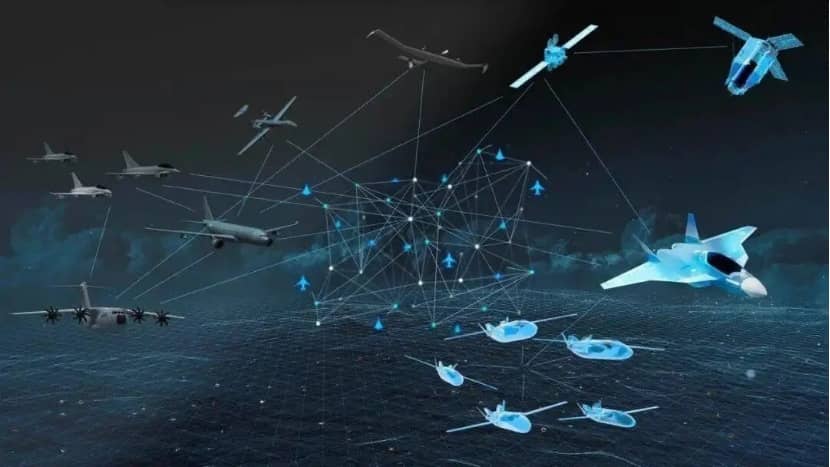
This highly dramatic exchange ratio of combat losses has completely rewritten the rules of traditional arms economics. The core contest of warfare has begun to shift from a mere competition of equipment performance to a systematic and prolonged attrition.
Meanwhile, due to the stealth and long-endurance characteristics of unmanned equipment, modern warfare is shifting from large-scale firepower coverage to precision strikes, covert sabotage, and distributed operations. The nature of warfare is evolving toward digitization, intelligence, and unmanned systems.
Upgrade of the Combat Command System
The traditional combat command system exhibits a pyramid structure, and the previously relied-upon centralized command dependent on hierarchical transmission is beginning to struggle to adapt to the highly dynamic and intensely contested modern battlefield.
With the deep integration of unmanned combat equipment and AI, modern combat command systems are evolving towards a distributed and flat structure.
In unmanned combat scenarios, commanders do not need to issue specific instructions; they only need to set mission objectives, rules of engagement, and authorization conditions. Unmanned combat equipment can then autonomously accomplish tasks such as path planning, target identification, dynamic avoidance, and even strike decision-making.
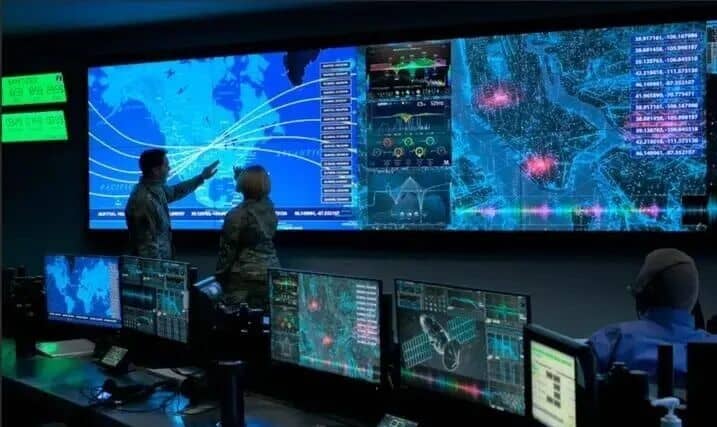
This new command model, which is mission-oriented and algorithm-supported, not only significantly shortens decision-making time but also propels modern warfare towards the direction of decision-centric warfare.
The unmanned arms race intensifies.
Currently, the rise of unmanned combat equipment is triggering a new wave of global arms race centered on intelligence, clustering, and systematization.
The United States expands production capacity and vigorously develops drone swarms, Russia integrates forces to build systematic unmanned combat capabilities, the European Union bands together to develop full-domain defense capabilities, Japan establishes unmanned underwater vehicle combat units to enhance regional intervention capabilities...
The world's major military powers are intensifying their deployment of unmanned equipment, striving to seize the initiative on future battlefields through equipment transformation and changes in combat models.