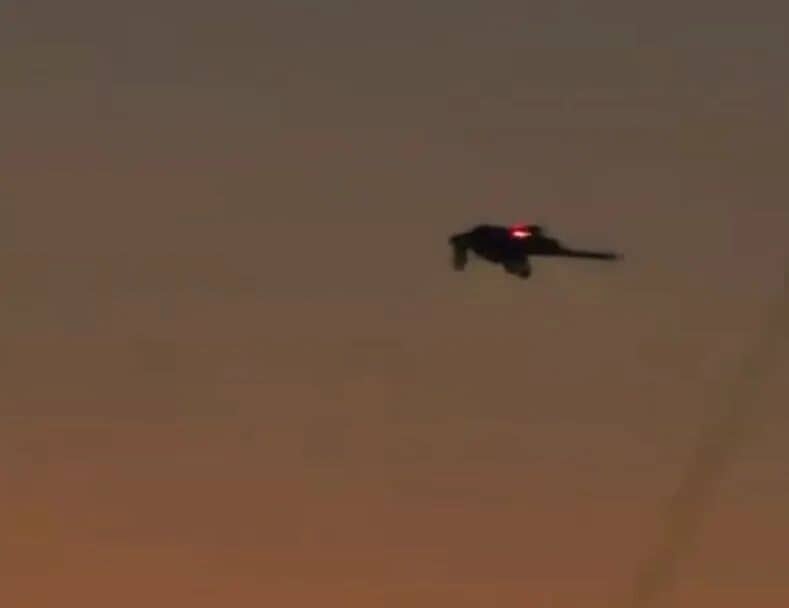
U.S. Military Stealth Drone Appears! Paving the Way for Aerial Intelligence to Capture Maduro
06/01/2026
According to a report on the War Zone website on January 3, 2026, on the night of January 3, 2026, the United States launched a joint military operation codenamed "Absolute Resolve" in Venezuela to capture Venezuelan President Nicolas Maduro and his wife. The operation was carried out by U.S. special operations forces and was supported by a large air force, including stealth fighters, electronic warfare aircraft, bombers, and various support aircraft. Among the many equipment involved in the operation, aviation observers captured video at the former Roosevelt Roads Naval Station in Puerto Rico showing the highly classified U.S. Air Force RQ-170 Sentinel stealth drone returning to base after the mission, confirming its participation in the operation.
The development of the RQ-170 Sentinel began in the early 21st century and was undertaken by the renowned Skunk Works division of Lockheed Martin. The project advanced under strict secrecy, and its existence was only vaguely acknowledged by the U.S. Air Force at the end of 2009. The public first caught a glimpse of its appearance through blurry photographs taken near Kandahar Airport in Afghanistan in 2007, earning it the nickname "Beast of Kandahar." The design of this unmanned aerial vehicle inherits the tailless flying wing configuration previously used by Skunk Works in stealth UAV projects such as the RQ-3 DarkStar and the P-175 Polecat. This configuration minimizes the radar cross-section to the greatest extent, which is key to achieving stealth. Although the official production numbers have never been disclosed, external estimates suggest a fleet size of between 20 and 30 aircraft. They are operated by the 30th and 44th Reconnaissance Squadrons under the 432nd Wing of the U.S. Air Force's Air Combat Command, with primary bases located at Creech Air Force Base in Nevada and the Tonopah Test Range.
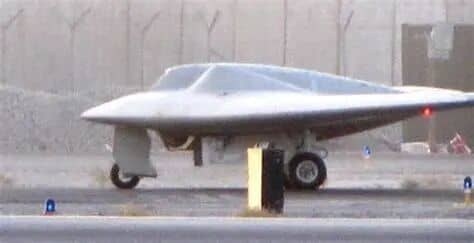
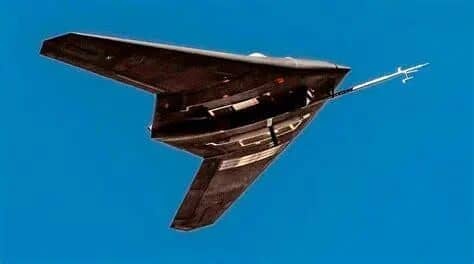
RQ-170 is a high-altitude long-endurance stealth unmanned aerial vehicle, estimated to be approximately 4.5 meters in length, with a wingspan estimated between 20 and 26 meters (some sources suggest a wingspan of about 11.58 meters or 20 meters), and a height of about 1.8 meters. It employs a tricycle landing gear configuration. The airframe extensively uses composite materials to reduce weight. The power system is speculated to consist of a General Electric TF34 or Honeywell TFE731 turbofan engine, providing approximately 4.2 tons of thrust, enabling it to sustain flight for several hours at altitudes around 15,240 meters. The "RQ" prefix in RQ-170 indicates its primary mission is reconnaissance of enemy forces using various advanced onboard sensors. The raised structure on top of the fuselage is believed to house a satellite data link or an electro-optical/infrared sensor ball, capable of providing full-motion video. The large fairing on the underside is designed to carry modular mission payloads, which may include an active electronically scanned array radar with synthetic aperture imaging and ground moving target indication capabilities. This allows it to penetrate clouds and camouflage, precisely map ground targets, and track moving vehicles. It may also be equipped with a signals intelligence suite for intercepting and locating communication signals. This multi-spectral sensing capability enables the RQ-170 to conduct long-term, covert surveillance of specific targets' daily life patterns, accurately recording their routines, security deployments, and activity routes, thereby providing crucial intelligence for operational planning.
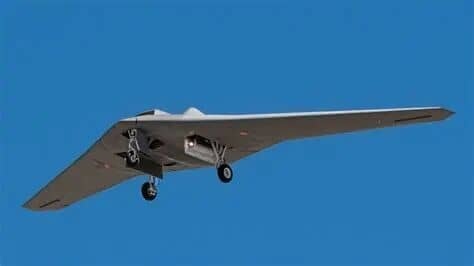
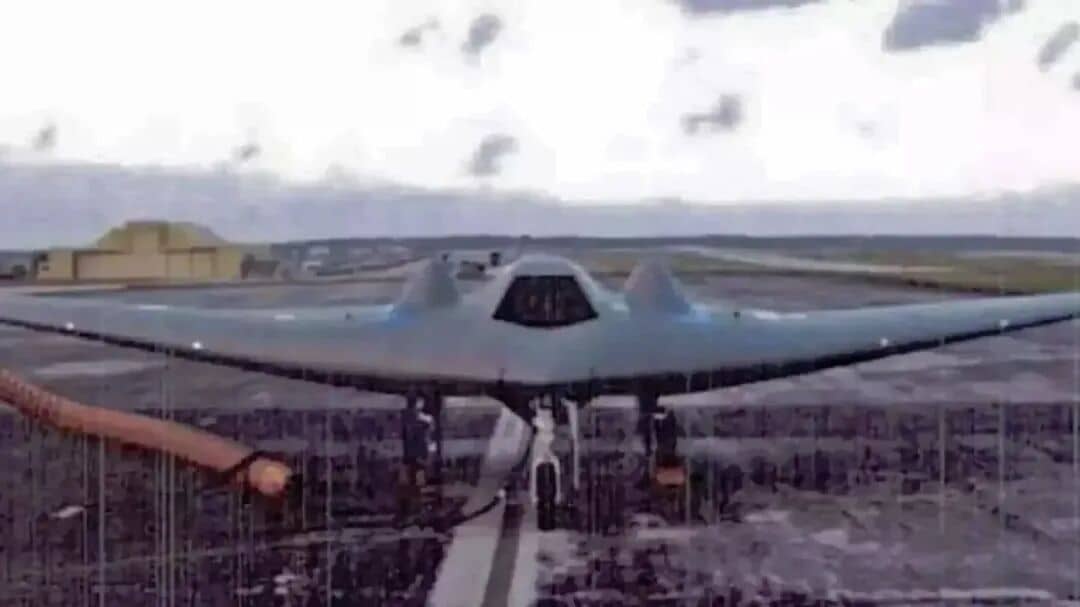
The design of the RQ-170 primarily aims to conduct persistent surveillance of high-value targets in high-threat environments and provide critical intelligence support for special operations. As a result, it has long been active at the forefront of the U.S. global intelligence, surveillance, and reconnaissance network, filling the gap between reconnaissance satellites (which have limited revisit cycles) and traditional reconnaissance aircraft (which have weak survivability). It is specifically tasked with conducting covert reconnaissance in heavily defended enemy airspace. The RQ-170's first combat deployment was during Operation Enduring Freedom in Afghanistan. In 2009, it was deployed to South Korea to monitor North Korea's military activities. Its most widely known operational application was in 2011, when it provided continuous real-time monitoring and intelligence support for SEAL Team Six during Operation Neptune Spear to capture Osama bin Laden, demonstrating its core value in supporting high-risk special operations. In the same year, this type of drone also suffered a major setback when an RQ-170 performing surveillance missions over Iran was captured by Iranian electronic warfare units, with the airframe largely intact. Iran claimed to have reverse-engineered it and subsequently developed its own stealth drones, such as the Shahed-171 and Shahed-181. Additionally, the RQ-170 has been used to monitor Iran's nuclear facilities, scout Russian military deployments in Crimea during the Ukraine crisis, and participated in joint exercises with B-2 stealth bombers and F-35 fighter jets in 2020 to test its penetrating reconnaissance capabilities under the support of suppressing enemy air defenses.

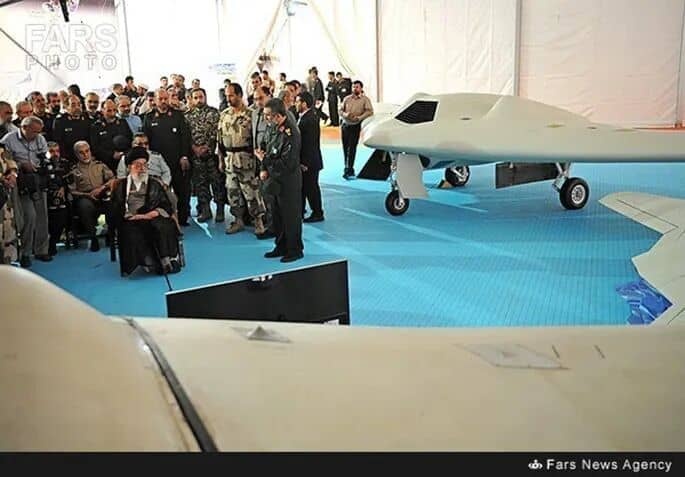
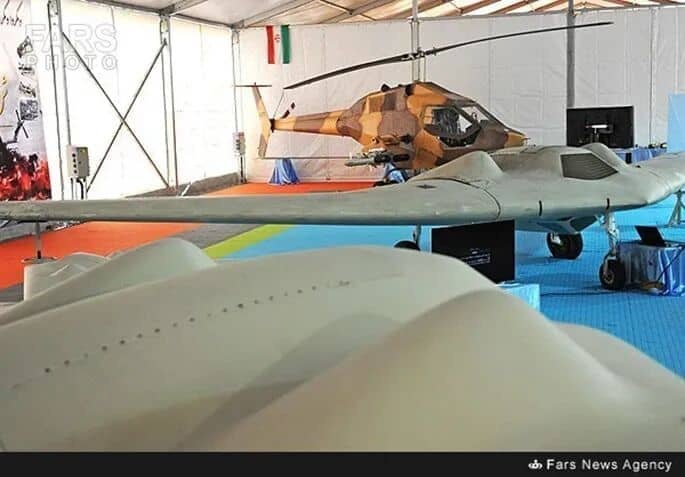
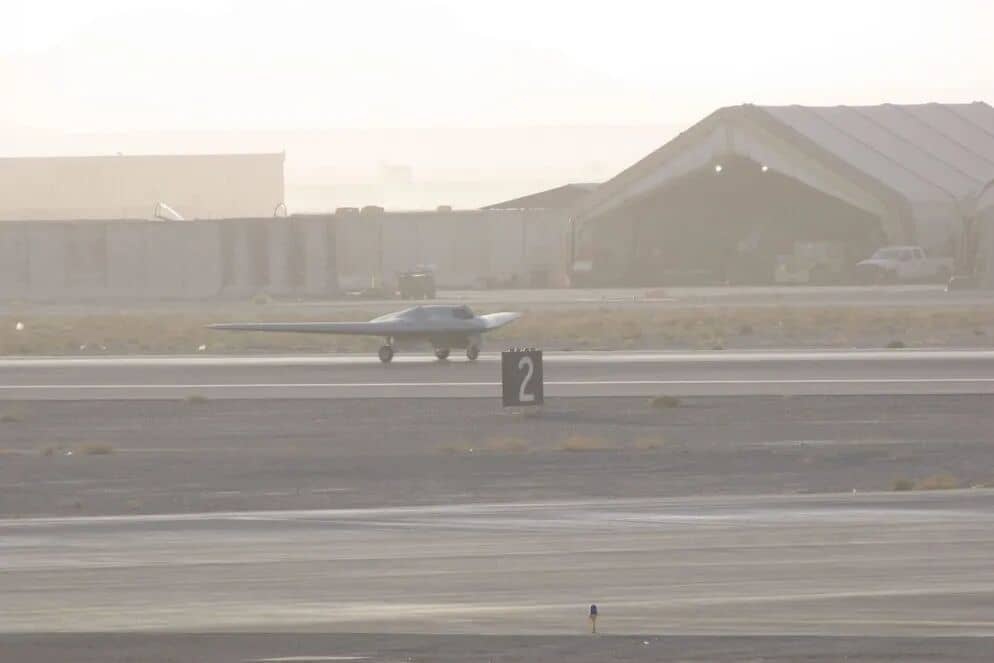
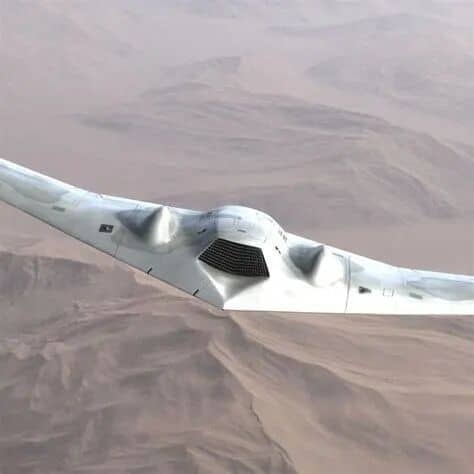
During the execution of the mission to capture Maduro, the RQ-170 would transmit encrypted intelligence in real-time to the command center via satellite data link, ensuring that decision-makers and frontline personnel received synchronized information. It is highly likely that the RQ-170 had been conducting continuous surveillance of Maduro's residence for several months prior to the mission. On the night of the operation, it collaborated with manned stealth fighters such as the F-22 and F-35 to provide an "eye in the sky" for special forces operating deep behind enemy lines. This enabled real-time monitoring of the target area, early warning of potential threats, and likely post-strike damage assessment. The appearance of the RQ-170 Sentinel stealth drone this time serves as a demonstration of strategic capability, indicating that the United States still possesses the ability to conduct prolonged covert surveillance and launch precise strikes and captures even under dense air defense systems. It also highlights the core value of stealth drones in modern warfare, particularly in high-end conflicts. Even platforms like the RQ-170, whose airframe performance is no longer cutting-edge, can still achieve significant stealth advantages when confronting the air defense networks of many regional nations. However, it must be said that the U.S. military has yet to unveil its next-generation product, indicating a significant regression in its research and development capabilities!