Establishment of two new major commands, reduction of four-star generals: the profound impact of the U.S. military's "transformation" reform
09/01/2026
Recently, The Washington Post published an exclusive report claiming that the Pentagon is planning a major overhaul of the U.S. military's command structure. Through institutional consolidation and reorganization, the number of U.S. Joint Combatant Commands will be reduced from 11 to 10, and the balance of power among senior generals will be adjusted.
Based on the strategic priorities outlined in the U.S. new edition of the National Security Strategy, the Pentagon is intensifying efforts to advance reforms in its military command system. If the relevant plans are ultimately implemented, they will bring about some of the most significant changes in decades to the high-level power structure of the U.S. military.
What changed from 11 to 8?What changed from 11 to 8?
Currently, the U.S. military maintains a total of unified combatant commands, including geographic commands (Central, European, African, Northern, Southern, Indo-Pacific) and functional commands (Cyber, Special Operations, Space, Strategic, Transportation).
All headquarters report directly to the Secretary of War, forming a multi-centered and wide-coverage command structure, but this also has the drawbacks of cumbersome command hierarchies and dispersed resources.
The Pentagon's adjustment of the U.S. military command structure this time reduces the number of joint combatant commands from 11 to 8, with the core intent being to integrate redundancies and focus on core functions. By cross-regionally integrating geographic commands and retaining and strengthening functional commands, it aims to streamline the chain of command and restructure the power hierarchy.
Emblem of the U.S. Military Joint Combatant Command.
Establish a new U.S. International Command.
Before the reform, the U.S. Central Command, European Command, and Africa Command were all independent geographic combatant commands, each commanded by a four-star general.
The Central Command focuses on military operations and security affairs in the Middle East, serving as the core force of the U.S. military in safeguarding its oil interests and geopolitical influence in the region.
The European Command is responsible for defense cooperation and military deployments across the European continent and its surrounding regions, carrying out the critical functions of deterring Russia and strengthening the NATO alliance.
The Africa Command coordinates military operations and security cooperation in the African region, with a focus on combating terrorism and expanding the United States' strategic presence in Africa.
After the reform, these three major commands will be downgraded as a whole, no longer maintaining the level of independent operational command headquarters. Instead, they will be uniformly placed under the jurisdiction of the newly established U.S. International Command.
This means the command authority of the three major headquarters will be significantly curtailed, with their military operations and resource allocations needing to comply with the overall arrangements of the International Command. The number of four-star general positions reporting directly to the Secretary of War will also be correspondingly reduced.This means the command authority of the three major headquarters will be significantly curtailed, with their military operations and resource allocations needing to comply with the overall arrangements of the International Command. The number of four-star general positions reporting directly to the Secretary of War will also be correspondingly reduced.
Establish the United States Southern Command.
Before the reform, the U.S. Northern Command and Southern Command were two independent geographic combatant commands, with clear divisions of labor and complementary areas of responsibility.
The core responsibility of the Northern Command is the defense of the United States homeland, while also overseeing military cooperation with Canada and Mexico, serving as a critical barrier for ensuring the security of the U.S. homeland.
The Southern Command oversees Central America, South America, and the Caribbean region, focusing on safeguarding U.S. economic interests and geopolitical influence in Latin America, while countering anti-American forces and security threats within the area.
After the reform, these two major commands will officially merge to become the United States Southern Command, achieving unified jurisdiction over military affairs in the Western Hemisphere.
This integration dismantled the previous division of military command within the Western Hemisphere, establishing the U.S. Southern Command as the single authoritative body responsible for coordinating U.S. homeland defense, North American bilateral cooperation, and regional control in Latin America.This integration dismantled the previous division of military command within the Western Hemisphere, establishing the U.S. Southern Command as the single authoritative body responsible for coordinating U.S. homeland defense, North American bilateral cooperation, and regional control in Latin America.
Retain the remaining six headquarters.Retain the remaining six headquarters.
The U.S. military reform retains several commands, including the Indo-Pacific Command, Cyber Command, Special Operations Command, Space Command, Strategic Command, and Transportation Command.
The reason these six commands have been retained is primarily because their core functions are highly aligned with the United States' current strategic priorities.The reason these six commands have been retained is primarily because their core functions are highly aligned with the United States' current strategic priorities.
Among these, the Indo-Pacific Command primarily serves the strategy of containing China, functional commands such as Cyber Command and Space Command focus on military competition in emerging domains, the Transportation Command ensures global military projection capabilities, and the Strategic Command maintains nuclear deterrence and strategic strike capabilities.
Major Reform, What's the Purpose?Major Reform, What's the Purpose?
The Pentagon's major reform of the U.S. military command structure this time is not a temporary decision, but rather an adjustment of the global military strategic focus, an enhancement of command efficiency, and a better response to great power competition in accordance with the new U.S. National Security Strategy.
Adjust the focus of military strategy.Adjust the focus of military strategy.
The new edition of the National Security Strategy released by the White House in December this year clearly states that the era when the United States supported the entire world order like Atlas has come to an end.
This statement signifies that the United States has abandoned its long-standing post-Cold War global intervention strategy, shifting instead to a retraction-focused approach. It involves withdrawing military resources from traditional key regions such as the Middle East and Europe, prioritizing their deployment to the Western Hemisphere.
In recent years, protracted geopolitical conflicts such as those between Israel and Palestine, and Russia and Ukraine, have compelled the United States to commit substantial military resources to the Middle East and Europe.
As domestic skepticism in the United States over the costs of overseas wars intensifies and the emphasis on homeland security grows, reallocating resources to the Western Hemisphere has become a priority for the Trump administration.
By merging the Northern and Southern Commands, the U.S. military can more efficiently coordinate homeland defense and regional security cooperation, while reducing its security commitments in the Middle East and Europe. This directly reflects the shift in U.S. national security strategy from global responsibilities to prioritizing its own interests.
The New U.S. National Security Strategy.
Enhance military command efficiency.Enhance military command efficiency.
In addition to external strategic drivers, the long-standing issues within the U.S. military's internal command system are also a significant reason for the reform.
The Washington Post cited senior U.S. defense officials stating that the current U.S. military command and control methods are showing signs of decline. The parallel existence of 11 combatant commands has led to excessively long decision-making chains, dispersed resource allocation, overlapping functions among some commands, and difficulties in rapidly responding to complex security needs.
The recent adjustment in the U.S. military's command system directly addresses these issues. On one hand, by establishing the International Command and the Americas Command, it resolves the problem of geographical command fragmentation; on the other hand, reducing the number of four-star generals and simplifying the reporting hierarchy can effectively minimize power redundancy and enhance command efficiency.
The core objective of this series of actions is to make the U.S. military command structure more streamlined, enhance decision-making speed and resource utilization efficiency, in order to adapt to more complex future security environments.
Adapting to the needs of great power competition.Adapting to the needs of great power competition.
According to the U.S. Department of War assessment, in the era of informationized and intelligent warfare, when facing near-peer adversaries such as China and Russia, the U.S. military's decision-making cycle and cross-domain joint effectiveness will become critical factors determining the outcome on the battlefield.
Therefore, in this adjustment of the command system, the U.S. military has retained and emphasized the status of the Indo-Pacific, Cyber, and Space Commands. The core objective is to develop a flatter and more agile command capability in the key regions and critical domains of great power competition, ensuring a decision-making advantage in potential military conflicts among major powers.
Inside and Out, Multiple Impacts.Inside and Out, Multiple Impacts.
As the world's most powerful military force, the U.S. military's command structure adjustments will have multiple impacts on its internal operations, alliance systems, and even the global security landscape.
Internal power restructuring within the U.S. military.Internal power restructuring within the U.S. military.
The most direct impact of the reform on the U.S. military is the restructuring of power among the senior officer corps.
The Central, European, and African Commands have been placed under the jurisdiction of the International Command, with the four-star generals who originally led these commands losing their authority to report directly to the Secretary of War and experiencing a significant reduction in their scope of power. In contrast, the influence of generals in commands such as the Americas Command and the Indo-Pacific Command, which have been retained or newly established, will rise sharply.
For a long time, there has been competition among the various U.S. military commands over resource allocation and strategic influence. This adjustment may intensify dissatisfaction among some generals, thereby fueling greater internal conflicts within the U.S. military.
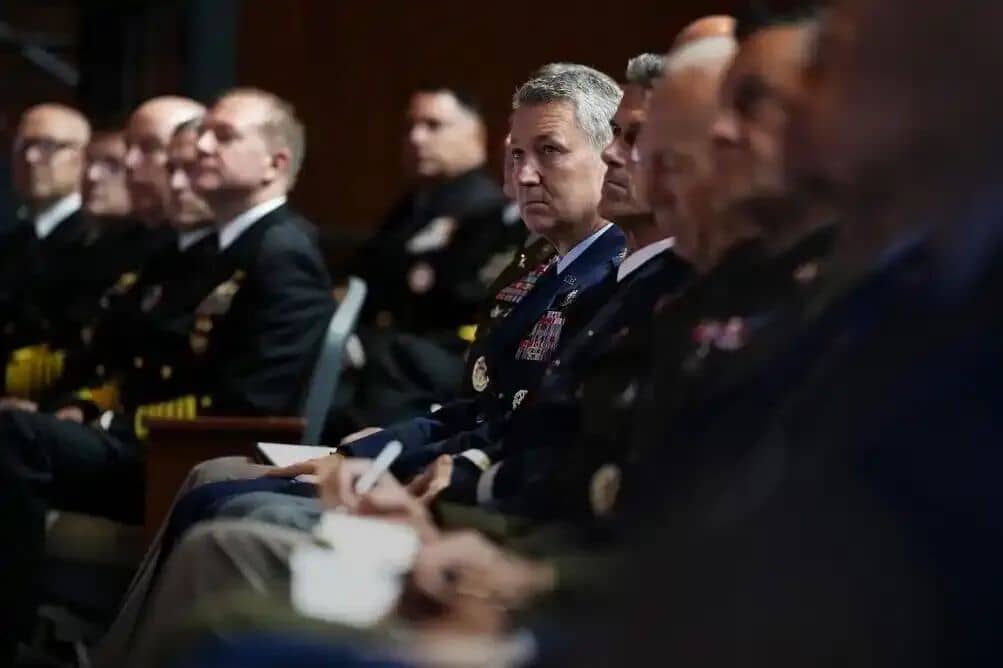
Senior U.S. military commander.
The alliance system is facing an impact.The alliance system is facing an impact.
This adjustment by the U.S. military will also profoundly impact the alliance system built by the United States.
**For European allies,** the incorporation of European Command under the jurisdiction of the International Command signifies a significant reduction in the direct involvement of the U.S. military in European defense.
Since the outbreak of the Russia-Ukraine conflict, Europe has become increasingly reliant on the U.S. military to address security threats from Russia. Now, as the focus of U.S. military strategy shifts westward, European countries may worry that the United States will withdraw its support, forcing them to strengthen defense cooperation within the European Union or seek other security partners. This would undoubtedly weaken America's strategic influence in Europe.
**For Middle Eastern allies,** the downgrade of CENTCOM's status may lead countries like Saudi Arabia and Israel to question the United States' security commitments.
Middle Eastern allies have long relied on the U.S. military to contain regional powers such as Iran and combat extremist organizations. If the U.S. military reduces its involvement, regional allies will have to adjust their security strategies, seek cooperation with other countries, and further weaken the strategic foundation of the United States in the Middle East.
Security Landscape, Accelerating Reshaping.Security Landscape, Accelerating Reshaping.
For the global security landscape, this reform will further accelerate the multipolarization process, while simultaneously intensifying security risks in certain regions, creating a complex situation characterized by both reshaping and turbulence.
On one hand, the strategic retrenchment of the United States will directly weaken its dominant capacity in global security affairs.
As more and more countries begin to promote defense autonomy, the international security order will enter a transitional period of multipolar reshaping.
On the other hand, the restructuring of the regional security landscape may give rise to new tensions.
The United States' move to retain and strengthen the Indo-Pacific Command, coupled with the military expansion of allies such as Japan, may exacerbate regional military confrontations and arms races, thereby increasing regional security risks.
The declining attention of the United States toward the Middle East and Africa may disrupt the existing security balance, intensify regional power rivalries, and lead to a significant increase in the risk of localized conflicts. The turbulence in hotspots such as Somalia and Yemen could further escalate.
Overall, the adjustment of the U.S. military's command system this time is not accidental, but an inevitable result of the collision between the relative decline of U.S. power and the global trend toward multipolarity.Overall, the adjustment of the U.S. military's command system this time is not accidental, but an inevitable result of the collision between the relative decline of U.S. power and the global trend toward multipolarity.
This most significant transformation in decades will not only reshape the U.S. military's combat capabilities and global role but will also introduce new variables into the global security landscape...