Review of Major Global Conflicts in the Year: What Are the Characteristics and Tactics?
06/01/2026
As 2025 draws to a close, over the past year, with the United States entering another reshaping cycle and the deepening imbalance in regional power development, the global situation has continued to trend towards medium-intensity conflicts. Amid these ongoing conflicts, some new tactics and methods of warfare have brought new insights as well as new threats. This article will reveal these new changes by summarizing the characteristics of the Russia-Ukraine conflict, Iran-Israel conflict, and India-Pakistan conflict. As 2025 draws to a close, over the past year, with the United States entering another reshaping cycle and the deepening imbalance in regional power development, the global situation has continued to trend towards medium-intensity conflicts. Amid these ongoing conflicts, some new tactics and methods of warfare have brought new insights as well as new threats. This article will reveal these new changes by summarizing the characteristics of the Russia-Ukraine conflict, Iran-Israel conflict, and India-Pakistan conflict.
Russia-Ukraine Conflict: Drone Tactics Continue to Evolve
As the most intense regional conflict, the Russia-Ukraine conflict has demonstrated continuous and rapid strategic evolution amid the slow movement of frontlines, with related tactics and methods quickly being updated. Among these, the most notable is the tactical optimization of drones.
First, both Russia and Ukraine have significantly increased the production scale of unmanned platforms. According to media reports, Ukrainian Defense Minister Shmyhal stated on December 24, 2025, that **this year, the Ukrainian armed forces will receive a total of 3 million first-person view (FPV) drones for precision strikes, nearly 2.5 times the number from last year**. Similarly, Russia's production capacity for various types of drones is also rapidly increasing. In 2024, Russia produced 1.4 million drones of various types annually, and by 2025, it is expected to reach a scale of 3 to 4 million drones. Among these, platforms like the Shahed-136 maintain a stable monthly production of around 5,400 units. In the field of FPV drones, although fiber-optic drones were deployed in combat as early as the beginning of 2024, by 2025, due to cost issues, fiber-optic drones accounted for only 8% to 10% of the total FPV drone usage. Various radio-controlled drones still dominate the field.
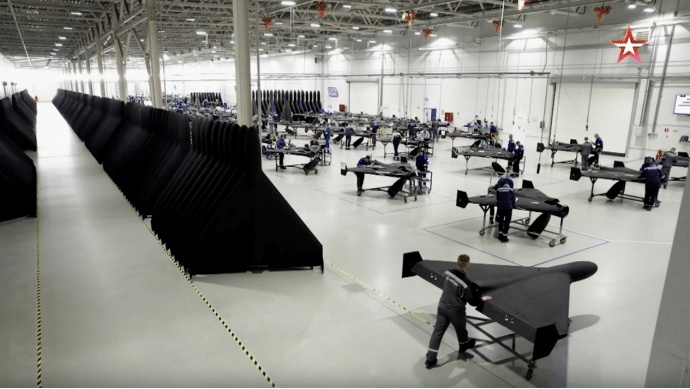
Russian Shahed/Geranium Drone Production Line
Secondly, the increase in quantity has enriched the scope, methods, and organization of drone usage by both Russia and Ukraine. Both sides extensively employ FPV drones for various tasks such as reconnaissance, strikes, mine-laying, transportation, arson, and counter-drone operations. Among these, Ukraine utilized specially designed FPV drones to launch Operation Cobweb within Russian territory, successfully destroying 10 Russian strategic bombers and transport aircraft, while damaging multiple others, severely undermining the strategic strike capabilities of the Russian Aerospace Forces. By the end of 2025, Ukraine leveraged various types of drones and unmanned boats to carry out diverse attacks on Russian-controlled Crimea, the Russian Black Sea Fleet port of Novorossiysk, and Russia's shadow fleet used for oil exports, posing a serious threat to the security behind Russian front lines. These operations have already gained significant strategic importance. It can be said that the large-scale use of drones has dramatically increased the pressure on rear-area air security, which may alter the fundamental logic of rear defense and raise the resource demands for ensuring rear-area security. FPV drones still constitute the main strike force for the Ukrainian military, with approximately 80% of Russian casualties caused by Ukrainian FPV operations.
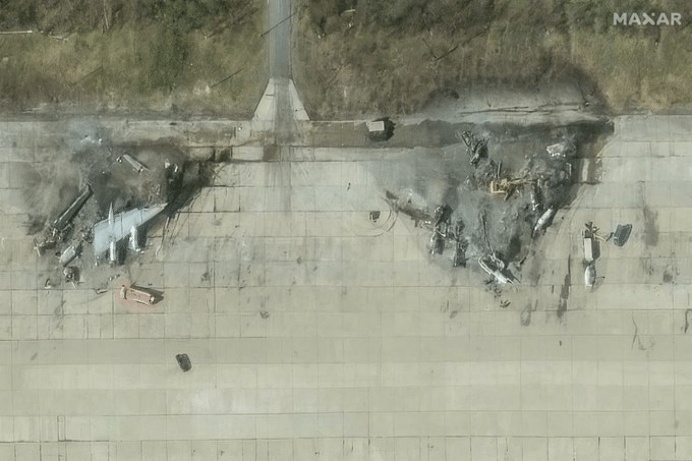
The destroyed Tu-bomber at the Olenya base ().
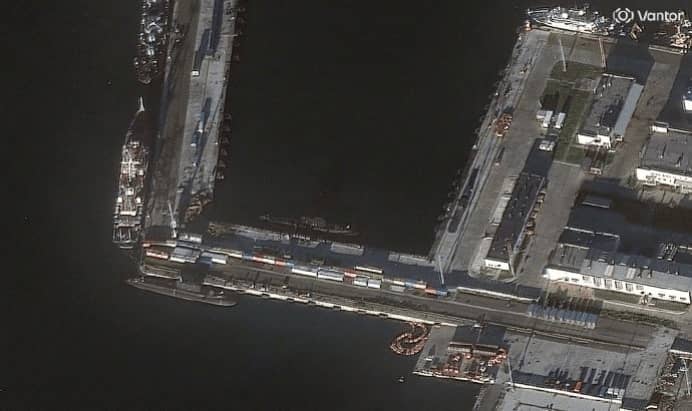
On [specific date], Ukraine used semi-submersible unmanned boats to attack the Russian Kilo-class submarine at the port of Novorossiysk.
FPV drones still constitute the primary striking force of the Ukrainian military, with approximately 80% of Russian casualties being caused by Ukrainian FPV drones. For the Russian forces, which possess more long-range artillery and glide aviation bombs, the proportion of casualties attributed to FPV drones is relatively lower. Both Russia and Ukraine have implemented a certain degree of organizational innovation in their use of drones, with both sides continuously exploring combat methods in practice after establishing independent drone units. In early 2025, Russia concentrated multiple drone units to conduct interdiction operations on the road from Suja Town in Kursk Oblast to Sumy City in Sumy Oblast, effectively disrupting the supply situation for the Ukrainian salient and making a significant contribution to the eventual Russian recapture of Kursk. According to Ukrainian descriptions, we could see two to three drones every minute. That's too many... Everyone knew Russia would try to cut this road, but it still caught our commanders by surprise. With the establishment of independent drone units, such concentrated deployments are likely to occur more frequently.
Without relying on Starlink, the Russian military utilizes a portion of Shahed (referred to by Russia as Geranium) drones to loiter near flight paths for signal relay, transmitting domestic Russian network signals deep into Ukrainian territory. This enables the operational feasibility of controllably deploying drones into the depths of Ukraine. Russia's improvements to the Shahed drones are also deepening. Downed Shahed drones have been found equipped with daytime cameras, thermal imagers, laser rangefinders, mesh modems, and antennas, indicating that these drones can be directly remotely controlled by operators and are fitted with LTE modems to transmit telemetry data. The increased production capacity of Russia's Shahed series drones has also significantly heightened Ukraine's air defense pressure. By the second half of 2025, the Russian military has been capable of sustaining drone assaults exceeding 400 sorties per day. If attack intervals are extended, they can deploy up to 803 drones in a single wave. Continuous airstrikes deep into Ukraine damage the country's infrastructure and production capacity, forcing Ukraine's already scarce air defense resources to be deployed more extensively to rear areas. This further optimizes the operational environment for the Russian Aerospace Forces' frontline aviation units.

The flight trajectory of the Russian Shahed/Geranium drone responsible for relaying signals
Beyond the application of drones in combat, other tactical innovations by both Russia and Ukraine have not been significant. Constrained by the uncertain stance of U.S. aid, Ukraine lacks newer equipment to improve its existing tactical system. Similarly, the Russian military has not been able to alter the fundamental characteristic of slow-moving frontlines, and concentrated mechanized combat units at the battalion level or above still face severe losses, which remains unacceptable for Russia, which needs to fight an economically sustainable war. The extensive use of drones enhances reconnaissance and strike capabilities, preventing large mechanized units from effectively assembling—a situation that has not substantially changed.
India-Pakistan Conflict: The Significance of Systematic Warfare Becomes Evident
The brief yet large-scale conflict that erupted between India and Pakistan in [year] is a more typical example of a local war under relatively high-tech conditions. Judging from the performance of both sides, the Pakistani military, despite being at a disadvantage in terms of scale, leveraged its more mature operational system to gain numerous tactical advantages. It managed to keep the intensity of the conflict and the losses within an acceptable range, making it arguably the victor of this conflict and far surpassing its performance in the Kargil conflict of [year].
India's original plan was likely to maintain conflict along the land border while utilizing air power and cruise missiles to strike deep into Pakistani territory, thereby controlling the intensity of the conflict. In response, Pakistan, having long anticipated India's war preparations, actively leveraged its rapidly advancing multi-domain operational capabilities in recent years to counter India's actions.
In the early hours of May 7, India launched Operation Sindur, aiming to strike nine targets of Pakistan in Kashmir and Punjab. India's first wave involved 17 aircraft taking off, and this Indian airstrike triggered a large-scale air battle, with 72 Indian and 42 Pakistani aircraft participating respectively. Pakistan effectively integrated its reconnaissance satellites, Saab 2000 AWACS aircraft, the Air Force Command Center, J-10CE fighter units, and electronic warfare units using the already established Air Force Link 17 data link. It first utilized electronic warfare and cyber warfare capabilities to disrupt and break India's command and control chain. Subsequently, AWACS aircraft designated targets, and J-10CEs launched PL-15E missiles to intercept Indian targets. Due to the broken command chain and technical deficiencies in their combat aircraft, India only detected the incoming missiles when the PL-15E entered its terminal acceleration phase. **Pakistan claimed to have shot down three Indian Rafales, one Su-30MKI, one MiG-29, and one Heron UAV that day.** Pakistan even stated that it refrained from shooting down more Indian aircraft to control escalation, having even locked onto an A-50I AWACS aircraft queuing at Agra. The integration of multi-domain operational capabilities by the Pakistan Air Force, enabling smooth communication, rapid decision-making, and proficient application, is the key to its dominance over the Indian Air Force.
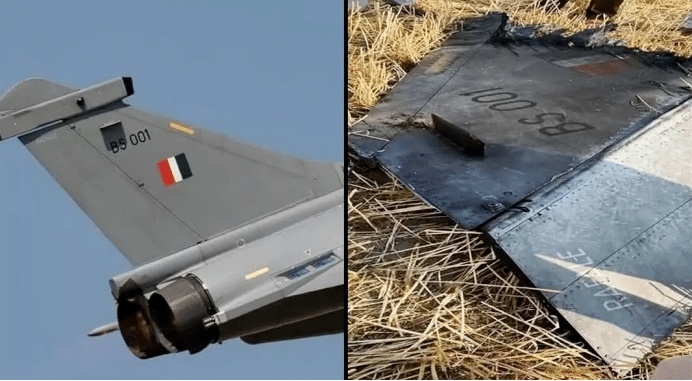
The downed Indian Air Force BS001 Rafale fighter jet, which was the first Rafale received by the Indian Air Force (Image source: internet, please contact for removal if there is any infringement)
The one-sided outcome of the May 7 air battle likely led to a setback in India's overall strategic plan. The Indian Air Force did not conduct any operations for two days afterward, relying only on land-based long-range munitions and drones for airstrikes, resulting in a significant drop in efficiency. It was not until May 10 that the Indian Air Force resumed small-scale airstrikes, while the Pakistani Air Force swiftly retaliated, refusing to back down. With the air force withdrawing from the battlefield, India's room for escalating the conflict was greatly reduced, effectively losing the initiative in the strategic contest. Pakistan successfully achieved a significant victory with limited resources, and this largest beyond-visual-range air battle in history thus gained strategic significance.
Apart from the May 7 air combat, both India and Pakistan also employed tactics such as drone strikes, cyber attacks, long-range artillery strikes, and ballistic missile anti-radiation operations. However, due to the high importance both sides placed on information warfare, there was significant information pollution, making it difficult to confirm many achievements deep within the opponent's territory through public channels. Nevertheless, it should be noted that the technological level demonstrated in this short yet intense conflict between India and Pakistan was slightly higher than that seen in the Russia-Ukraine conflict, with more diverse tactical applications, offering greater reference value.
Israel-Iran Conflict: Airstrikes and Ballistic Missile Tactics
June 12, 2025, the 12-day conflict that erupted between Israel and Iran is a further manifestation of the escalating conflict in the Middle East. With the support or acquiescence of countries such as the United States, Germany, the United Kingdom, and Azerbaijan, Israel, relying on long-term undercover and recently turned Mossad infiltration cells within Iran (approximately 1,300 personnel) to carry out sabotage attacks first, followed by sustained airstrikes, aimed to cripple Iran's command structure, air defense systems, missile retaliation capabilities, and nuclear research and development capacity. Iran retaliated against Israel using drones and ballistic missiles. Overall, Israel achieved an overwhelming advantage, while Iran suffered significant losses, but Israel's intention to instigate a regime change in Iran was not realized.
In the realm of intelligence warfare, Israel has successfully recruited over a thousand individuals within Iran, including Iranians as well as Indian and Afghan workers in the country. These operatives employ methods such as drones, remote-controlled missiles, and bomb-making to carry out sabotage from within Iran. Among these covert agents, some collaborate with infiltrating Israeli special forces to strike Iranian air force bases and air defense positions. Others operate in small groups to conduct assassinations, bombings, and drone launches. Israel’s recruitment efforts have been highly effective. In Tehran alone, approximately ten thousand drones or drone components were discovered during the conflict. While Iran successfully thwarted Israeli assassination attempts targeting several high-ranking Iranian officials, a significant number of senior officials and nuclear scientists were still assassinated.
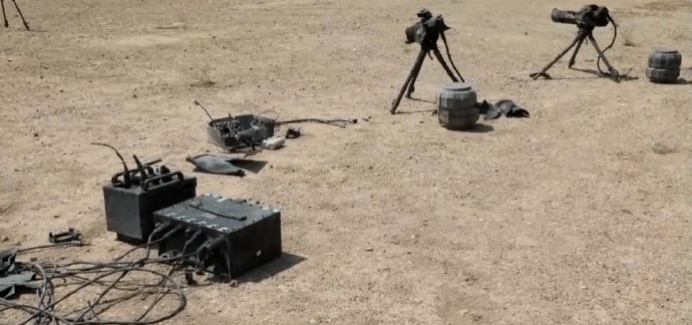
The remote-controlled Spike missile launch position used by the Mossad undercover team (Image source: Social media screenshot, please contact for removal if infringement occurs)
Extensive intelligence support was also a crucial factor enabling Israel to successfully carry out the surprise attack and suppress Iran's counterattacks with a small tactical fleet. On December 1, the head of the Israel Defense Research and Development Directorate (MAFAT) stated that during the 12-day war, Israel generated over 12,000 satellite images, covering an area of approximately 10 million square kilometers, providing direct support for strike missions against thousands of targets. Additionally, Israel conducted over 50 emergency intelligence mission adjustments for its satellites, which significantly contributed to the precision of intelligence and operations. Meanwhile, artificial intelligence systems were utilized to assist in target identification. Israel also conducted high-intensity electronic warfare, with the entire Tehran region being under jamming interference.
Based on the paralysis of Iran's air force and air defense positions, the Israeli Air Force utilized stand-off weapons to strike Iran's long-range radar systems and key military and political departments. The weapons used included the Rampage air-launched ballistic missile, AGM-142 Popeye air-to-ground missiles, GBU-39, and others. Strikes by the Israeli Air Force on western regions such as Tabriz often originated from Iraqi airspace, where support from aerial refueling forces of the United States, Germany, and the United Kingdom was also available. Among the remaining offensive routes, some entered from southern Iran, while others passed through Azerbaijan directly toward Tehran. After completing the paralysis of Iran's regional air defense systems and strikes on military departments, the Israeli Air Force conducted continuous attacks on Iran's missile launch bases. According to information released by Israel, Israeli forces struck over 1,480 military targets in Iran, destroying 20 fighter jets, up to 1,000 ballistic missiles, and dozens of missile launchers. Of course, this tactic may be somewhat exaggerated, and the size of Israel's tactical fleet is insufficient to comprehensively suppress a country with such vast depth as Iran. Maintaining a daily air strike scale of 50-80 sorties over 12 days was already the limit for the Israeli Air Force.
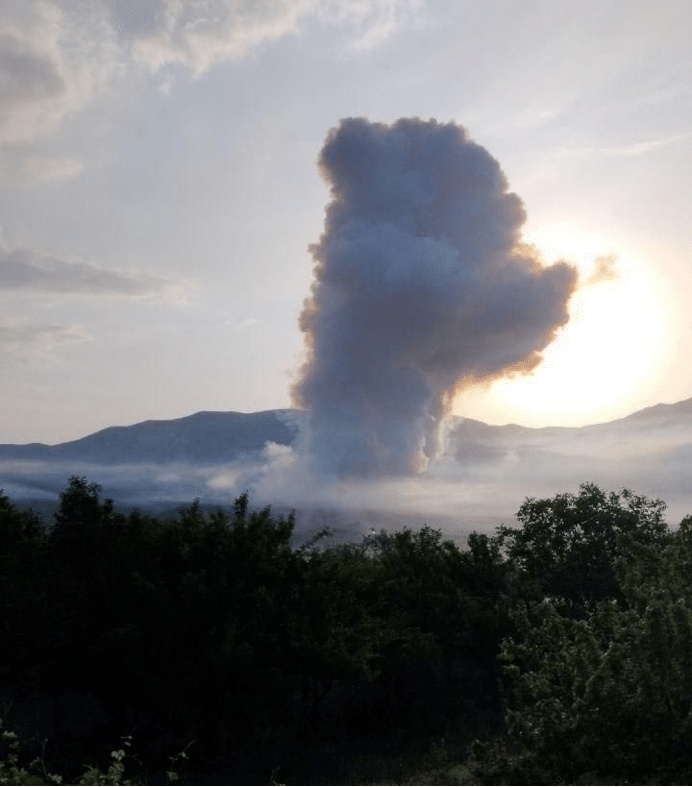
The Israeli Air Force attacked a missile site in Tabriz, Iran.
Iran used ballistic missiles and drones for retaliation, but due to interception by U.S. forces, Jordanian forces, and Israel at multiple stages along their flight paths, the overall penetration effectiveness fell short of expectations. According to publicly available information, during the conflict on the 12th, Iran launched 530 to 591 missiles toward Israel, with approximately 50 to 75 achieving direct hits, resulting in an interception rate of 86% to 91.6%. This figure may be on the higher side, as Iran targeted five Israeli military bases, air defense positions, and intelligence centers, while Israel's information control measures have prevented open-source intelligence from clearly revealing the actual damage to its military bases. Iran also deployed over 1,050 drones, of which 570 reached Israeli territory. However, reports indicate that only one successfully evaded interception, leading to an interception rate exceeding 99.9%. Based on videos captured by Jordanian photographers, Israel's Haaretz calculated that approximately 80 Arrow-3, 22 Arrow-2, and 93 THAAD interceptors were used. In mid-July, CNN reported that the United States expended roughly 100 to 150 THAAD interceptors over the 12-day Iran-Israel conflict, accounting for about 25% of the U.S. inventory.
Iran's counterattack models mainly include the Emad missile, Haj Qasem missile, Khaibar Shekan missile (also known as the Khaibar Shekan missile), Fattah-1 missile, and others. It is noteworthy that as Israel's air defense system ammunition was depleted, the penetration efficiency of Iranian missiles increased. The penetration rate of Iranian missiles was 8% in the first 6 days, rising to 16% in the following 6 days. By June 22, 10 out of the 27 ballistic missiles launched by Iran successfully penetrated. This occurred despite the suppression of Iran's western missile positions by the Israeli Air Force and the relatively outdated equipment of the eastern missile forces, which made it difficult for them to undertake major counterattack tasks. According to overseas open-source intelligence statistics, Iran has a total of 38 missile shelters, of which 21 were damaged and 17 remained undamaged (above-ground sections). After the war, Iran stated that it had only used 25% to 30% of its missile reserves.
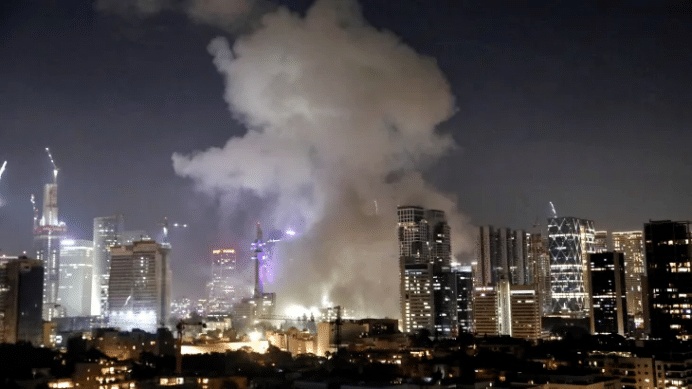
Iranian ballistic missiles hit Tel Aviv.
However, the air defense system that Iran invested heavily in building before the war quickly became ineffective during the conflict. The core reasons remain the paralysis of the system and a severe shortage of troop density, with the interior infiltrated by Mossad covert attack teams. Of course, Iran’s air defense forces gradually restored some capabilities within about an hour after the airstrikes, relying on optically guided weapons and anti-aircraft drones originally prepared for the Houthis to achieve some successes in drone combat. Iran claimed to have shot down over Israeli drones, and Iranian air defense personnel suffered casualties in the war.
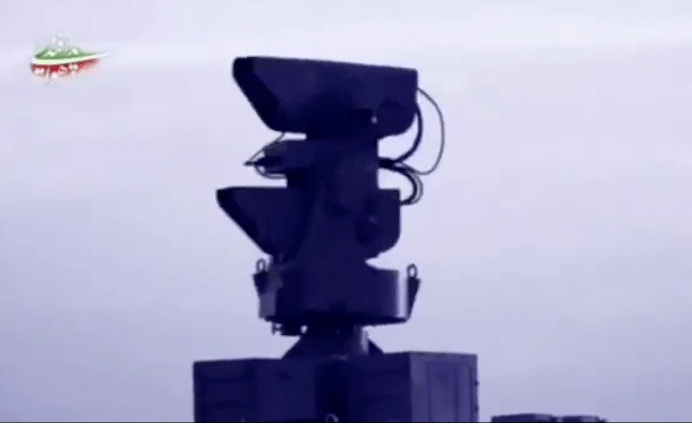
Iran's air defense capabilities have been increasingly restored by relying on air defense systems utilizing electro-optical detection, such as the AD-08 Majid optical/infrared composite guidance short-range air defense system.
The activities of the Iranian Air Force have been limited. On the [specific dates], Iranian Air Force F-14 and MiG-29 fighter jets appeared over Tehran and Tabriz, likely involved in intercepting Israeli drones and loitering munitions. According to Iranian sources, Iranian Air Force F-14 fighters engaged in an aerial battle with Israeli fighter jets lasting up to [specific duration] hours, with multiple instances of mutual radar lock-ons, though conditions for an attack were not met. All losses suffered by the Iranian Air Force occurred on the ground, and neither side managed to shoot down the other's fixed-wing combat aircraft during the aerial engagements.
Overall, the Iran-Israel conflict once again validates many traditional understandings. First, domestic control within a country remains a key foundational condition for waging war. Second, relatively outdated radar systems and a small number of advanced air defense systems are insufficient to ensure air defense security; air defense systems must involve aviation forces. Third, the stockpile of interceptor missiles in missile defense operations is crucial; exhausting the stock of anti-missile missiles means the attacking side will gain a greater advantage. Finally, the Israeli Air Force still largely relies on drones to monitor and suppress Iranian missile launch sites in practice. The extensive use of drones can significantly enhance the sensing, control, and strike efficiency of small-scale manned aircraft fleets. Overall, the Iran-Israel conflict once again validates many traditional understandings. First, domestic control within a country remains a key foundational condition for waging war. Second, relatively outdated radar systems and a small number of advanced air defense systems are insufficient to ensure air defense security; air defense systems must involve aviation forces. Third, the stockpile of interceptor missiles in missile defense operations is crucial; exhausting the stock of anti-missile missiles means the attacking side will gain a greater advantage. Finally, the Israeli Air Force still largely relies on drones to monitor and suppress Iranian missile launch sites in practice. The extensive use of drones can significantly enhance the sensing, control, and strike efficiency of small-scale manned aircraft fleets.
Given the ongoing tense standoff between Israel and Iran, the possibility of a new round of conflict between the two sides in the coming year cannot be ruled out.
"Midnight Hammer": A typical long-range strike by the U.S. military.
On June 22, the United States launched Operation Midnight Hammer, conducting airstrikes against Iran's nuclear facilities at Fordow, Natanz, and Isfahan. In the context of the Israel-Iran conflict, the United States needed to symbolically intervene to deter Iran's nuclear threshold policy, appease domestic Jewish interest groups, and avoid getting the U.S. truly entangled in Iran as a new strategic quagmire. Therefore, the U.S. required a performative military operation.
The U.S. military deployed a total of various types of aircraft for combat operations. It is estimated that tanker aircraft accounted for approximately ~, with ~, possibly including ~, and ~. The remaining aircraft consisted of tactical planes such as ~, ~, and ~. The U.S. military’s deployment began on the ~th of the month, with some of the tanker aircraft stationed in the Azores and Italy, while others passed through U.S. bases in Germany and Spain on the European continent before finally arriving at Prince Sultan Air Base in Saudi Arabia. The deployment continued until the ~th.
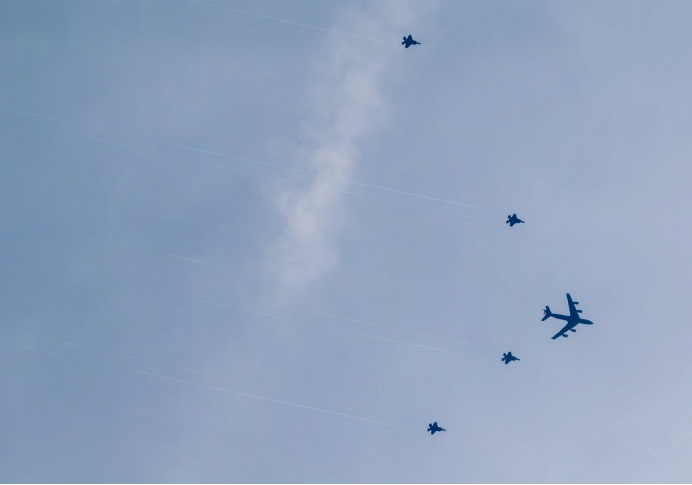
Flying in formation with fighter jets from RAF Lakenheath.
While mobilizing troops, according to a new report citing an unnamed Israeli official, the United States provided Israel with a list of air defense targets it hoped to be destroyed before Operation Midnight Strike. Consequently, during the U.S. military’s preparatory efforts, the Israeli Air Force also conducted targeted strikes on air defense positions near key Iranian targets.
On a certain date, the U.S. military carried out a meticulously planned feint operation. In the early morning, two flight formations, with call signs and , took off from Whiteman Air Force Base in Missouri. Their destination was confirmed to be Andersen Air Force Base on the Pacific island of Guam. This feint leveraged the influence of numerous open-source intelligence analysts online and drew international attention to the Pacific region.
Another group of B-2s, which actually carried out the strike mission, flew eastward carrying bunker-buster bombs. The B-2A bombers involved in the airstrike belonged to the 509th Bomb Wing, with approximately 9 aircraft, of which 7 were responsible for strikes and 2 served as backups. From the released images and video clips, we can see that among the B-2 bombers participating in the mission were the "Spirit of Indiana" (82-1069), the "Spirit of Nebraska" (89-0128), and the "Spirit of Louisiana" (93-1088). Based on the B-2's maximum payload capacity, each B-2 needed to carry 2 GBU-57/B Massive Ordnance Penetrator bombs.
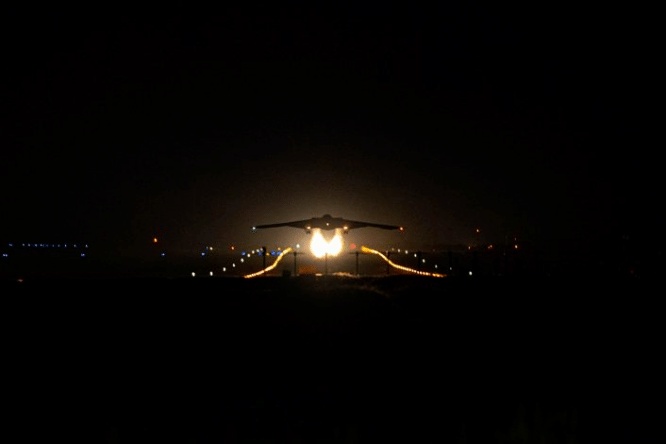
Photos from the B-2's departure for the Midnight Hammer Operation (
7 B-2 aircraft, along with 2 backup aircraft, departed from Missouri. Since two GBU-57/B bombs weigh over 32 tons, the B-2 could not take off with a full fuel load. After taking off from Whiteman Air Force Base, the B-2A completed its first aerial refueling off the East Coast of the United States, covering approximately 2,200 kilometers in this phase. Subsequently, the B-2A fleet crossed the Atlantic Ocean and conducted its second aerial refueling near the Azores, covering a distance of about 4,000 to 4,500 kilometers. Following this, the third aerial refueling was completed over the eastern Mediterranean, with a flight distance of approximately 5,000 kilometers. After the third refueling, the B-2A joined the tactical aircraft fleet over Iraq and entered Iranian airspace under the cover of tactical aircraft. At this point, the flight distance was about 2,200 kilometers, and approximately 18 hours had passed since takeoff. The U.S. stated that these aircraft flew silently eastward, with minimal communication throughout the entire process. Just before the B-2 entered Lebanese or Israeli airspace, tactical aircraft deployed at Prince Sultan Air Base in Saudi Arabia began taking off. The fleet then assembled near the western border of Iraq and Syria. Simultaneously, the USS Georgia nuclear submarine in the Arabian Sea launched 24–30 Tomahawk cruise missiles to strike ground nuclear facilities in Isfahan.
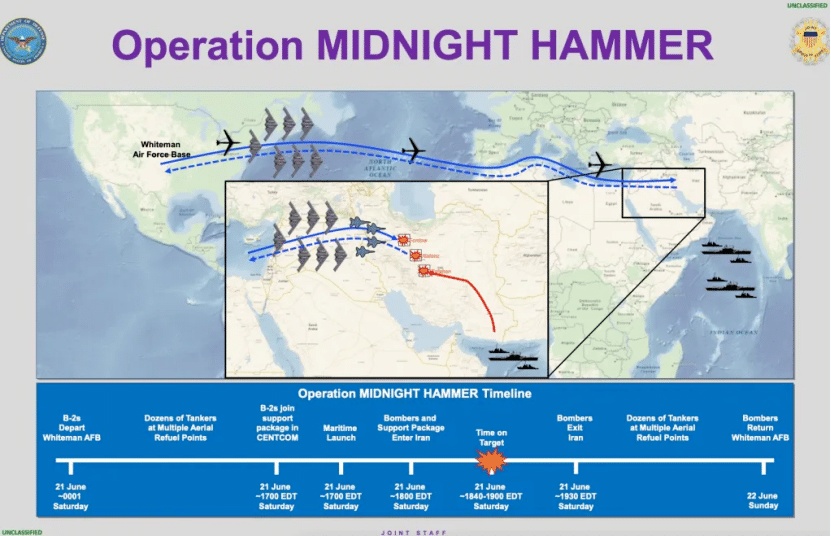
Operation Midnight Hammer Strike Schematic
After assembling, the aircraft formation entered Iranian airspace under the lead of tactical aircraft. Fourth and fifth-generation aircraft surged ahead of the strike group at high altitude and high speed, clearing threats from Iranian fighter jets and air defense missiles along the flight path. According to information released on November 24, the F-35As from the 34th Fighter Squadron of the 388th Fighter Wing, stationed at Hill Air Force Base in Utah, were the earliest aircraft to enter Iranian airspace, tasked with executing SEAD missions.In addition to stealth aircraft, the United States also employed various deception techniques and tactics, including decoys. Overall, during the Midnight Hammer strike operation, U.S. tactical aircraft conducted continuous escort and air defense suppression missions, while Iranian air defense systems did not launch any counterattacks.
In the early hours of Iran time, B-2 bombers began dropping bombs on Iranian nuclear facilities. The deeper underground facility at Fordow likely suffered strikes from two GBU-57 bombs, while Natanz was hit by two similar bombs. Subsequently, cruise missiles arrived around Iran time, completing a comprehensive attack on the ground facilities in Isfahan. The entire assault on three different locations was completed within minutes. The U.S. military publicly claimed to have used a total of munitions. After deducting the two GBU-57 bombs and up to cruise missiles, the number of other precision-guided weapons consumed by the U.S. military in this operation should be between and . Following the attack, the U.S. aircraft fleet withdrew westward from Iranian airspace without any losses, while the B-2 bombers returned to Whiteman Air Force Base after three aerial refuelings, with the entire flight lasting hours.
Based on the assessment of satellite images after this operation, the large surface structures of the Isfahan nuclear facility were severely damaged. At the Natanz nuclear facility, a crater approximately 5.5 meters in diameter is visible in the soil directly above the underground complex section, but the extent of damage to the underground portion remains unclear. At Fordow, the U.S. military employed an attack method akin to multiple munitions striking a single point, targeting the ventilation shafts of the underground facility, yet the actual damage to the underground facility is unknown. The White House claimed that this operation had set back Iran's nuclear program by two years. However, on June 24, CNN and The New York Times reported that **a confidential preliminary bomb damage assessment report released by the Defense Intelligence Agency (DIA) indicated that the airstrikes damaged surface buildings and sealed the entrances to two targets but did not destroy the relevant underground facilities or the centrifuges required for producing enriched uranium for nuclear weapons.** The report concluded that the United States did not destroy Iran's nuclear program but delayed it by several months.
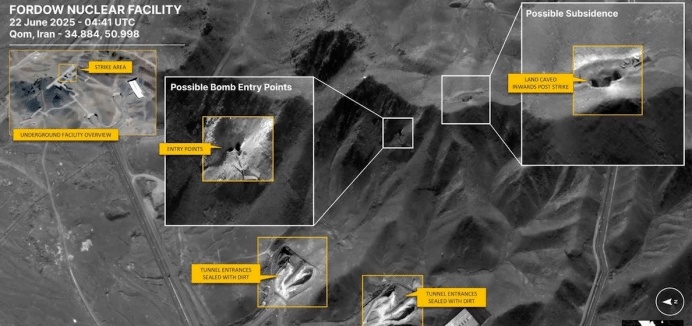
Satellite images after the Fordow bombing.
In retaliation, on a certain date, Iran launched ballistic missiles targeting a U.S. military base in Qatar. Although Qatar closed its airspace before the missiles arrived and claimed to have intercepted all of them, photos revealed that one Iranian missile struck a U.S. military contractor-owned AN/TSC-156 strategic satellite communication antenna. This incident demonstrates the high accuracy of Iran’s short-range solid-fuel missiles.
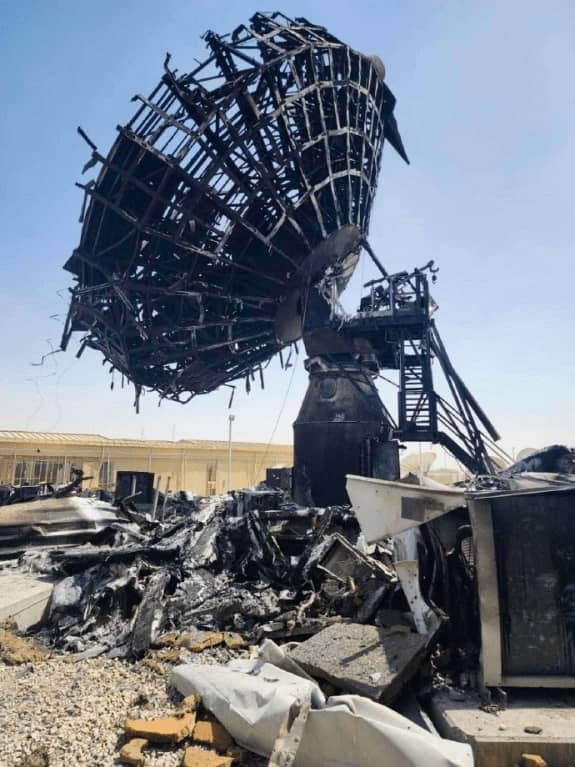
Allegedly a satellite communication radar for a U.S. military contractor.
In this operation, the U.S. military deployed a number of aircraft and achieved success by sustaining no losses during the offensive. At the same time, this strike was a relatively rare long-range operation since the outbreak of the war in Afghanistan, which validated the current fleet's capability for large-scale, long-range deployments and the U.S. military's ability to plan complex campaign missions. While the action carried strong political implications, it remains the largest penetrating air superiority operation conducted by the U.S. military in recent years, and its characteristics are still worthy of reference.
Looking Ahead
In addition to the aforementioned conflicts, the conflicts that erupted in the year include the Sudanese civil war, regional conflicts between Rwandan-backed movements and the Democratic Republic of the Congo, and two rounds of Thai-Cambodian clashes, among others. Although these conflicts are not technologically advanced, they have significant implications for regional order. A series of large-scale armed conflicts have seen a notable increase in intensity compared to previous years, indicating that the world order is already in a period of restructuring. Therefore, in the coming year, various regional conflicts may develop along the following trajectories.
1. Profound Changes in the Global Security Landscape
The strategic transformation of the United States will have a significant impact on the global security order. Although there are still disagreements between the White House and Congress regarding the new version of the U.S. National Security Strategy, and its actual positioning remains unclear, considering the ideological stance and fundamental approach of the U.S. government, its foreign strategy is likely to evolve, albeit with fluctuations, toward controlling the Western Hemisphere and pursuing offshore balancing in the Eastern Hemisphere. This could not only lead to decreased stability in Latin America but also increase internal conflicts within the Eastern Hemisphere. The fragmentation and regionalization of the global system, as well as the intensity of specific conflicts, are likely to further intensify.
The strategic retraction of the United States with limited intervention will still leave new power gaps, which will ultimately be filled by major powers within the region. Consequently, the shift in U.S. security strategy will transmit to the regional level, inducing new instabilities. In the coming year, global hotspot conflicts are likely to undergo certain transformations, with varying dynamics across different regions.
2. Regional Conflicts Move Towards Differentiation
2. Regional Conflicts Move Towards Differentiation
The Russia-Ukraine conflict will continue, but the trend toward its end is emerging. Russia's economy is suited for a war model, and Ukraine's reliance on external aid is unlikely to fundamentally change. However, Ukraine's external support currently depends mainly on Europe, which is not in a state of war. With its resource endurance and tactical accumulation, Russia still has a higher probability of achieving a costly victory compared to other outcomes. Both sides may gradually enter a ceasefire negotiation stage through external mediation.
The risk of conflict in the Middle East remains persistently high. The fundamental tensions between Israel and Iran remain unresolved, and Israel is highly likely to maintain its pressure on Iran's nuclear program. A new round of large-scale conflict between the two sides cannot be ruled out. Hotspot issues such as the situation in Syria and the civil war in Yemen may see new developments due to great-power competition and the realignment of regional forces. This will involve heavyweight regional players such as Turkey and Saudi Arabia, and the Levant region in the Middle East will continue to be the area with the highest concentration of global conflicts.
The situation in South Asia is trending toward stability, with the India-Pakistan conflict likely to return to a managed state. The systemic shortcomings exposed in India during the recent conflict will be difficult to address in the short term, and domestic political pressure and economic burdens will limit its appetite for external adventurism. Pakistan, on the other hand, will consolidate its advantages in systematic warfare to maintain a balance of deterrence. Both sides may reestablish conflict management mechanisms through diplomatic channels, making large-scale military confrontation unlikely.
Latin America may become a new hotspot for conflicts. As the U.S. national security strategy shifts toward deepening control over the Western Hemisphere, political forces in Latin America, such as left-wing groups, which do not align with the Trump administration's ideology, will face greater external pressure. The United States may reshape the regional order through direct intervention, economic coercion, and other means, triggering localized turbulence and confrontation.
The landscape in Africa may become further complicated, with the likelihood of the United States intervening in the continent's resource development also on the rise. Africa is poised to become a key region for major powers vying for influence, potentially leading to an increase in proxy wars.
3. New Trends in Tactical Development
3. New Trends in Tactical Development
Unmanned aerial vehicle (UAV) warfare remains a key focus area for technological development. Countries will continue to advance research and development in UAV empowerment and swarm combat technologies. The depth of coordination between unmanned platforms, manned equipment, and network systems will further increase. The proliferation of UAV technology may exacerbate asymmetric warfare risks, placing higher demands on rear-area defense systems.
Systematic confrontation will permeate into medium and low-intensity conflicts. Beyond major powers and regional powers, some medium-sized countries will advance the integrated development of command and control, intelligence reconnaissance, and electronic warfare systems. The disparity in systematic capabilities will further widen the gap in military effectiveness among nations.
The development of air and missile defense systems is likely to focus on enhancing their capability to sustain prolonged, high-intensity operations. Lessons from the Iran-Israel conflict and the Russia-Ukraine war will drive countries to increase investment in air and missile defense systems. Key priorities will include upgrading radar technology, developing specialized counter-drone equipment, building reserves of anti-missile munitions, and strengthening regeneration capabilities. Additionally, emphasis will be placed on preventing internal infiltration and cyberattacks from undermining the integrity of air defense systems.
The competition for intelligence and cyberspace will intensify. Major military powers will further enhance their capabilities in areas such as special infiltration, cyber reconnaissance, and satellite intelligence. The application of artificial intelligence in intelligence analysis, target identification, and command decision-making will become more widespread.
It is foreseeable that with the end of the stable cycle of the international order, geopolitical shifts and realignments have already begun, and the future will present more complex situations and new trends. Maintaining strategic composure and keenly observing the evolving dynamics are essential to remaining invincible in this historical cycle.